
Protecting Trees During Construction
How thoughtful planning before construction begins can help protect mature trees, their roots, and the soil that supports them.
Protecting Trees During Construction
Mature trees can be among the most valuable features of a property. They provide shade, beauty, privacy, wildlife habitat, stormwater benefits, and a sense of place that may take decades—or generations—to develop.
During construction, attention is often focused on the new home, addition, driveway, garage, utility installation, or other improvement. Trees that remain standing may appear unaffected when the project is complete. However, construction can alter roots, soil conditions, and drainage in ways that may not become visible for months or even years.
Protecting a tree during construction involves much more than avoiding damage to its trunk.
The roots, soil, drainage patterns, and growing space surrounding the tree all contribute to its long-term health and stability. The best opportunity to protect these resources is often before construction begins.
Construction Affects More Than What We Can See
Trees depend on a large, interconnected root system for water, nutrients, oxygen, energy storage, and structural support.
Many actively absorbing roots are relatively close to the soil surface and may extend well beyond the edge of the canopy. Because roots are underground, their location and importance may be overlooked during construction planning.
Activities that may affect trees include:
Excavation for foundations, additions, utilities, or drainage
Construction of driveways, roads, patios, and walkways
Changes in soil grade
Repeated equipment or vehicle traffic
Storage of soil, stone, materials, or equipment
Soil compaction
Changes in drainage or water movement
Damage to trunks or branches
Clearing and grading around existing trees
Even when work does not occur directly beside the trunk, roots and surrounding soil may still be affected.
One of the challenges of construction-related damage is that symptoms may be delayed. A tree may remain green immediately after roots are cut or soil is compacted, then gradually show changes during the months or years that follow.
Possible symptoms include:
Canopy thinning
Reduced annual growth
Smaller-than-normal leaves
Premature fall color or early leaf drop
Increasing branch dieback
Reduced ability to tolerate drought or other environmental stress
These symptoms are not unique to construction damage. However, recent excavation, grading, compaction, or changes in drainage are important parts of a tree’s site history and should be considered during an evaluation.
UFT INSIGHT
A tree that remains standing after construction has not necessarily been protected. Preserving the roots, soil, and growing environment is just as important as preventing visible damage to the trunk and branches.
Plan for Tree Preservation Before Construction Begins
Tree protection is most effective when it is considered during the early planning stages—not after excavation and equipment traffic have already begun.
Before construction, consider:
Which trees are priorities for preservation
The species, size, condition, and expected longevity of each tree
The location of proposed structures, driveways, utilities, and access routes
How close excavation may occur to important trees
Where equipment will travel and materials will be stored
Whether existing drainage patterns may change
Whether branches may interfere with construction access
How trees will be protected throughout the project
Not every tree is an appropriate candidate for preservation. A tree with significant structural concerns, advanced decline, poor long-term potential, or unavoidable conflicts with the project may require a different management decision.
Evaluating trees before plans are finalized can provide more options than attempting to respond after construction has begun.
Establish and Protect the Root Zone
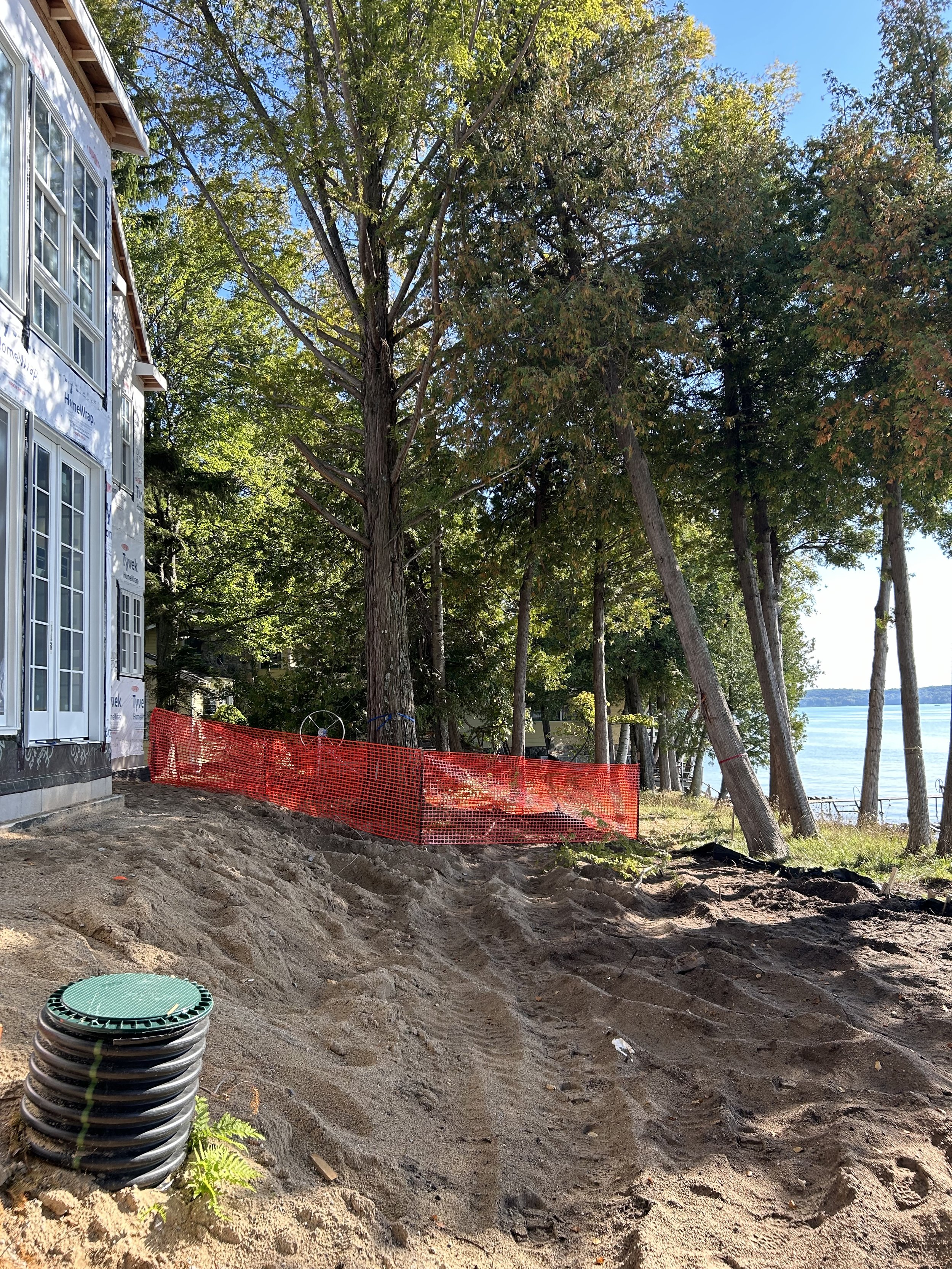
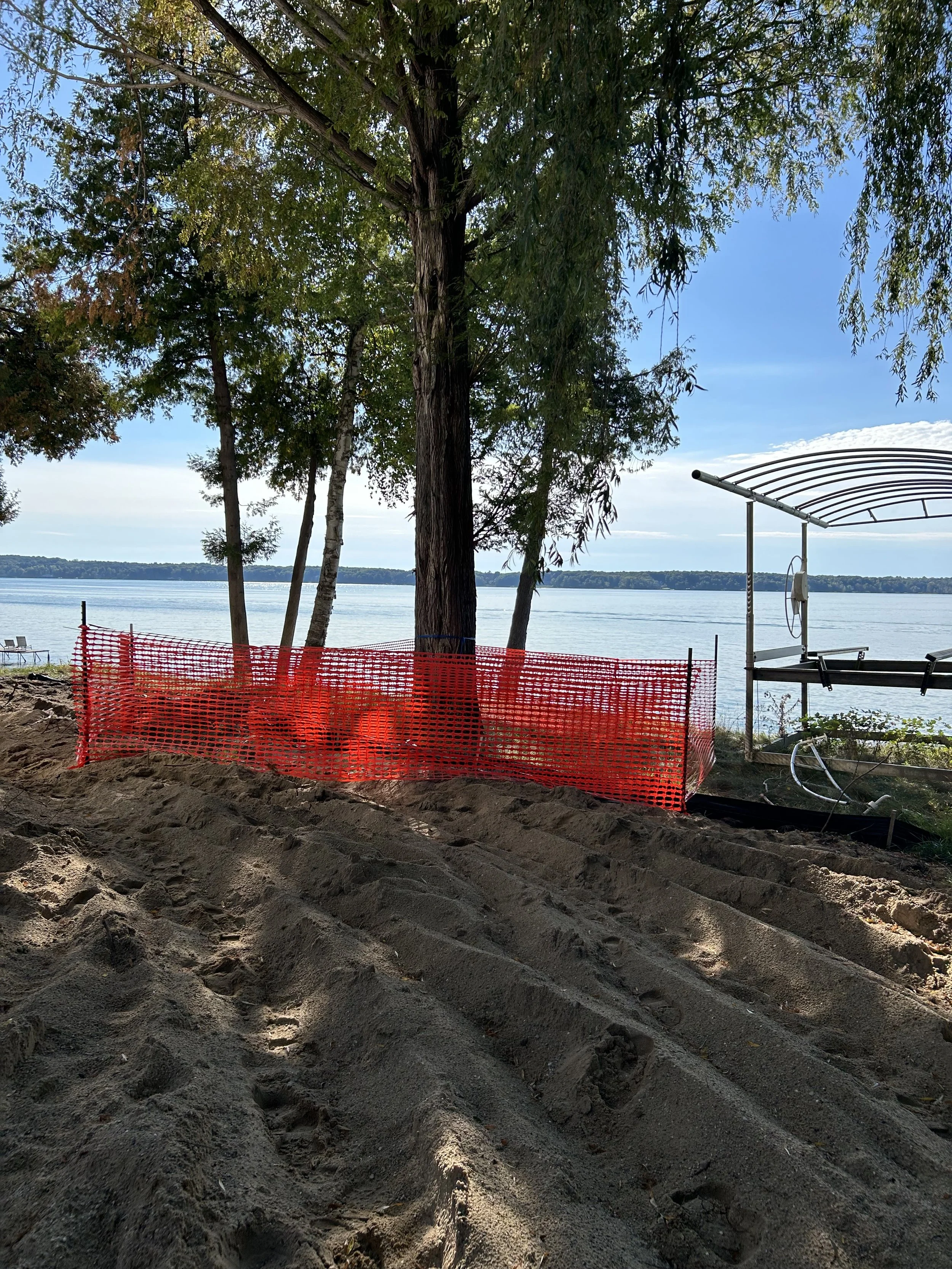
A tree protection zone is a designated area surrounding a tree where construction activity is restricted.
The purpose is to protect more than the trunk. A well-planned protection zone helps reduce disturbance to roots and soil.
Within the protected area, avoid:
Excavation or grading
Equipment and vehicle traffic
Parking
Material storage
Soil stockpiling
Mixing or washing concrete
Disposal of construction materials or liquids
The appropriate size of a protection zone depends on the tree species, trunk diameter, age, condition, root distribution, soil conditions, site limitations, and type of construction activity.
Wrapping boards or padding directly around the trunk may reduce visible bark damage, but it does little to protect the roots or surrounding soil.
Protective fencing should be installed around the designated protection zone whenever possible. It should be clearly visible, installed before equipment and materials arrive, and maintained throughout construction.
The protection zone should not gradually become a parking area, equipment route, or storage location as the project progresses.
Soil Compaction and Material Storage
Healthy soil contains pore spaces that allow water and oxygen to move through the root zone.
Repeated traffic from excavators, skid steers, trucks, trailers, lifts, and other equipment can compress the soil and reduce this pore space. Compaction may occur without obvious surface damage and may:
Limit oxygen movement
Reduce water infiltration
Restrict root growth
Alter drainage
Increase surface runoff
Make it more difficult for roots to access moisture and nutrients
The area beneath a tree may also appear to be a convenient location for storing soil, gravel, lumber, equipment, or construction materials. However, heavy materials and repeated traffic can compact soil, cover roots, and alter moisture conditions.
Preventing unnecessary traffic and storage within the root zone is generally more effective than attempting to correct severe soil compaction after construction.
When soil conditions have already been affected, additional evaluation may help determine whether root-zone management is appropriate. Depending on the site, this may include mulch, supplemental watering, soil improvement, or other treatments intended to support root function.
In some situations, UFT’s Deep Root Feeding program may be used to support the root-zone environment following construction-related stress. Rather than simply encouraging rapid aboveground growth, the program is designed to improve soil conditions through a blend that includes organic matter, biochar, humates, beneficial biological components, and carefully selected nutrients.
These materials may help support soil structure, biological activity, moisture retention, and nutrient cycling. However, Deep Root Feeding does not replace root protection, restore roots that have been removed, or immediately correct severe soil compaction. The appropriate treatment depends on the tree, soil conditions, type of disturbance, moisture availability, and remaining root environment.
Root Cutting and Excavation
Roots may be damaged during excavation for foundations, utility lines, driveways, drainage systems, retaining walls, or changes in grade.
The effect of root cutting depends on:
The number and size of roots affected
The distance from the trunk
The tree species, age, and condition
Soil conditions
Whether important structural roots are involved
The amount of undisturbed rooting area that remains
Cutting one large root may have a different effect than disturbing many smaller roots across a broad area.
Root loss may affect water and nutrient uptake, energy storage, tree health, and—in some situations—structural stability.
When excavation near an important tree is unavoidable, evaluating the proposed work before digging may help identify alternatives or reduce unnecessary damage.
Consider Alternatives to Traditional Trenching
Utility installation often involves trenching, which may cut through roots along the entire length of the excavation.
Depending on the site and project, alternatives may include:
Rerouting utilities away from important trees
Using existing utility corridors
Reducing the width of excavation
Using trenchless installation methods
Boring beneath portions of the root zone
Carefully exposing roots before excavation
Adjusting the location of drainage, irrigation, or utility lines
No method is appropriate for every site, and even trenchless work may affect roots depending on depth, access requirements, and equipment placement.
Early coordination provides more opportunities to evaluate alternatives.
Changes in Soil Grade and Drainage
Adding or removing soil can alter the environment in which roots function.
Adding soil over an existing root zone may affect oxygen movement, water infiltration, soil moisture, and root function. Removing soil may expose or damage roots and reduce the amount of soil available to support the tree.
Avoid piling soil against the trunk or burying the root flare. A healthy root flare is generally visible where the trunk widens and transitions into the major structural roots.
Construction may also change how water moves across and through a property. New roofs, driveways, patios, retaining walls, grading, drainage systems, and compacted soil may redirect water toward or away from existing trees.
Potential concerns include:
Increased runoff
Prolonged soil saturation or standing water
Reduced water infiltration
Drier soil conditions
Erosion
Both excessively dry and overly wet soil can negatively affect root function. A tree adapted to existing site conditions may respond gradually when those conditions change.
Protect Trunks and Branches
Although root and soil protection are essential, visible portions of the tree also need consideration.
Construction equipment may damage bark, break branches, or create wounds.
Before work begins:
Identify branches that may interfere with construction access
Establish equipment routes with adequate clearance
Avoid repeatedly striking or scraping the trunk
Do not attach signs, cables, fencing, or equipment to the tree
Avoid unnecessary branch removal
Have necessary pruning completed using appropriate pruning practices
Removing large branches simply to create equipment access may alter tree structure and create long-term concerns.
Planning access before construction begins may reduce avoidable pruning or emergency cuts.
Monitor Trees During and After Construction
Tree protection should continue throughout the project.
Periodically check that:
Protective fencing remains in place
Equipment stays outside designated protection zones
Materials are not being stored beneath trees
Soil is not being added or removed unexpectedly
Drainage patterns have not been unintentionally altered
Trunks and branches have not been damaged
Changes to the construction plan have not created new conflicts
After construction, monitor trees for changes in:
Canopy density
Leaf size and color
Annual growth
Branch dieback
Soil moisture and drainage
Root-zone conditions
Photographs taken before, during, and after construction can provide a useful record of changes over time.
Supporting Trees After Construction
A tree affected by construction does not automatically need fertilizer.
Canopy thinning, reduced growth, or leaf discoloration may be related to root loss, soil compaction, changes in drainage, drought stress, or other conditions that fertilizer alone will not correct.
Applying nutrients without understanding the underlying cause may not address the actual problem.
Depending on the tree and site, recommendations may include:
Monitoring
Supplemental watering
Proper mulch
Soil evaluation
Soil improvement
Root-zone management
UFT Deep Root Feeding
Corrective pruning
Further investigation
Tree-risk assessment
UFT’s Deep Root Feeding program may be appropriate when improving the soil environment, supporting moisture retention, and encouraging long-term root-zone function are part of the management objective. However, treatment should be based on actual site conditions rather than used as an automatic response to construction stress.
The appropriate strategy depends on what changed, how the tree is responding, and what conditions remain available to support recovery.
When Professional Evaluation Is Usefu
Consider involving an arborist before construction when:
Mature or high-value trees are located near proposed work
Excavation may occur within or near the root zone
Driveways, foundations, utilities, or retaining walls are being planned
Significant grading is proposed
Equipment access may conflict with trees
Important trees need to be prioritized for preservation
The long-term suitability of retaining a tree is uncertain
An arborist may help evaluate tree condition, identify potential conflicts, recommend protection zones, document existing conditions, communicate tree-protection priorities, and monitor trees during or after construction.
Early involvement may provide opportunities that are no longer available once roots have been cut or soil conditions have been altered.
The Bottom Line
Mature trees and new construction can often coexist—but successful preservation requires planning.
Protecting the trunk alone is not enough. The roots, soil, drainage, and growing environment surrounding the tree all contribute to its health and stability.
The most effective tree-protection decisions are usually made before construction begins, before equipment enters the site, and before excavation locations become difficult to change.
Thoughtful planning cannot eliminate every impact, but it can reduce avoidable damage and improve the likelihood that valuable mature trees remain an asset to the property long after construction is complete.
Related Reading
Building Healthy Soil Around Mature Trees
Signs Your Tree May Be in Trouble
When Should I Call an Arborist?
Protecting Mature Trees During Landscaping Projects
HEALTHY SOIL. | STRONGER TREES. | LASTING LANDSCAPES.
Planning construction near mature trees? UFT Tree Care Specialists provides science-based tree-preservation consulting, preconstruction tree evaluations, and practical recommendations to help protect valuable trees throughout Northern Michigan.
ufttree.care • ben@ufttree.care • 231-409-0442
